
A windshield chip does not always require a full replacement. Many small chips and short cracks can be repaired when the damage is fresh, clean, and in a safe location. The important question is whether the damage still falls within common windshield repair standards for size, location, depth, and urgency.
At Six Flags Glass in Victoria, Texas, we help drivers understand when a windshield can be repaired and when replacement is the safer choice.
The Size Rule
Chips smaller than a quarter and cracks shorter than 6 inches, about the size of a dollar bill, are generally repairable. These size limits give technicians enough room to fill the damaged area with resin and stabilize the glass before the crack grows.
Size is not the only factor, though. A small chip may still need replacement if it is contaminated, spreading, too deep, or located in a dangerous area of the windshield. That is why a professional inspection is the best way to know whether repair is still safe.
The Location Rule
Damage in the driver’s direct line of sight usually requires a full replacement. Even a high-quality professional repair can leave a faint scar, shadow, or visual distortion. If that mark sits where the driver needs clear vision, replacement is often the safer option.
Damage within 2 inches of the windshield edge is also a concern. The edge of the windshield carries structural stress, and cracks near that area are more likely to spread. Because the windshield helps support the roof and proper airbag deployment, edge damage can affect more than appearance.
The Depth Rule
Windshields are made from laminated glass, which includes two layers of glass bonded around a plastic interlayer. Many chips affect only the outside layer, making professional resin repair possible.
If the damage penetrates both layers of laminated glass, it cannot be repaired. Deep damage compromises the glass structure and prevents resin from restoring the windshield properly. If you can feel the damage from inside the vehicle, or the crack appears to go through the glass, replacement is usually required.
The Urgency Factor
South Texas heat and temperature swings can turn a repairable chip into an unrepairable crack in just a few days. Hot sun, cold air conditioning, road vibration, and sudden temperature changes all add stress to damaged glass.
If you notice a new chip, keep it clean and dry, avoid sudden temperature changes, and have it inspected quickly. Repairing eligible damage early can save money and help prevent a full windshield replacement.
FAQs
Can a spiderweb crack be repaired?
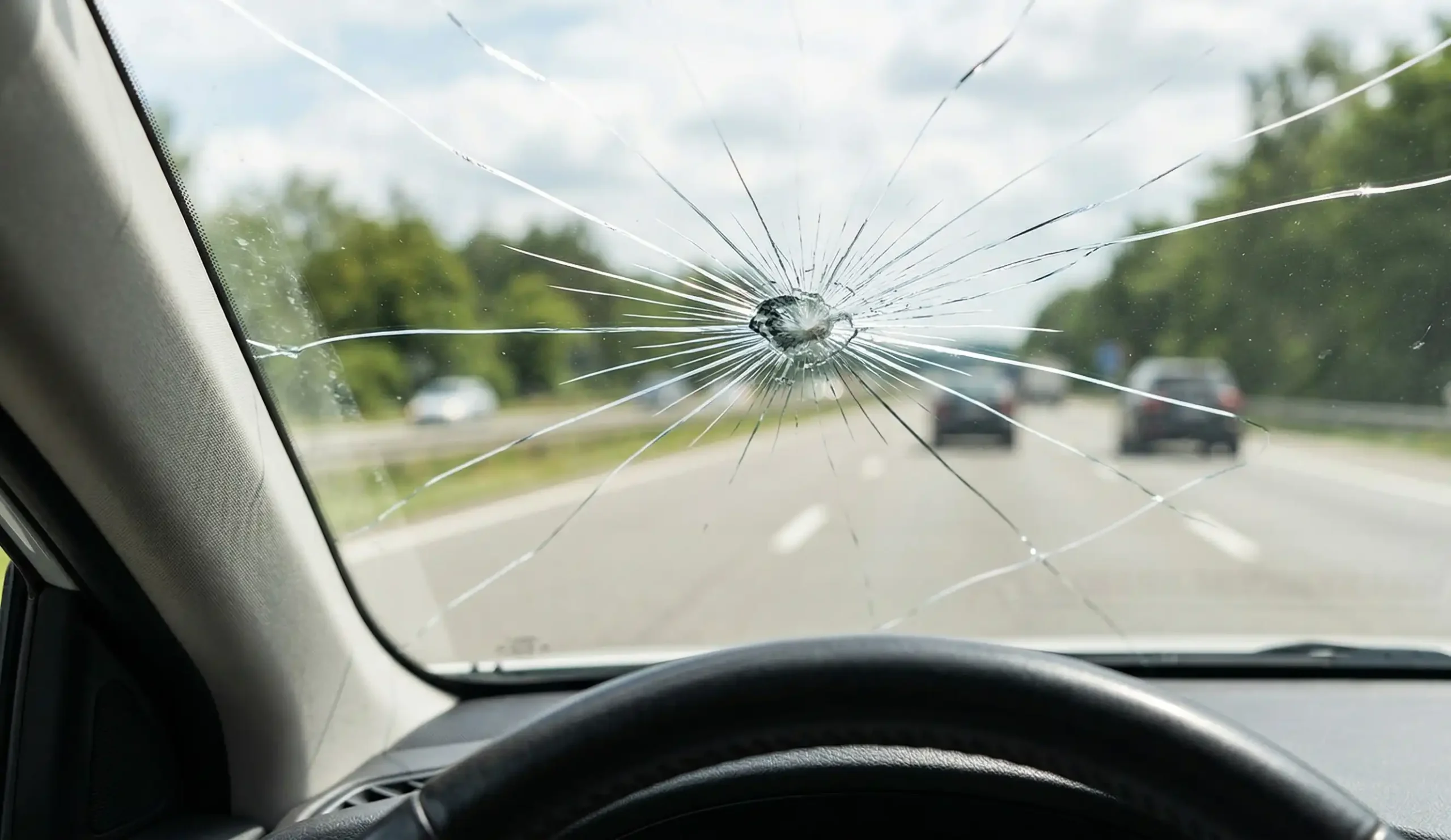
No. A “spiderweb” crack (multiple cracks intersecting or radiating from a single impact point) indicates that the windshield’s structural integrity has completely failed in that area. The glass cannot safely hold the pressure of the repair resin, and the damage will continue to spread under the stress of daily driving. A complete replacement is mandatory.
Will a repaired windshield chip completely disappear?
No. While professional UV-cured resin will restore up to 95% of the windshield’s structural strength and drastically improve its appearance, a faint scar, shadow, or outline will usually remain. The goal of a repair is structural stabilization and safety, not cosmetic invisibility.
Can a windshield chip be repaired more than once?
Typically, no. Once a chip or crack has been filled with hardened resin and cured under a UV light, that specific damaged area cannot be drilled out and repaired again. If a previous repair fails or continues to spread, the only remaining option is a full windshield replacement.
How long does a professional windshield chip repair take?
A standard professional windshield chip repair typically takes between 20 and 45 minutes from start to finish. This includes cleaning the impact area, vacuuming out trapped air, injecting the optical resin, and curing it under a specialized UV light.
Does repairing a windshield weaken the glass?
No, a professional repair actually restores the strength of the compromised glass. When performed correctly, the injected resin bonds the broken layers of the laminated glass back together, preventing the damage from spreading and ensuring the windshield can still properly support the vehicle’s roof and airbag deployment.